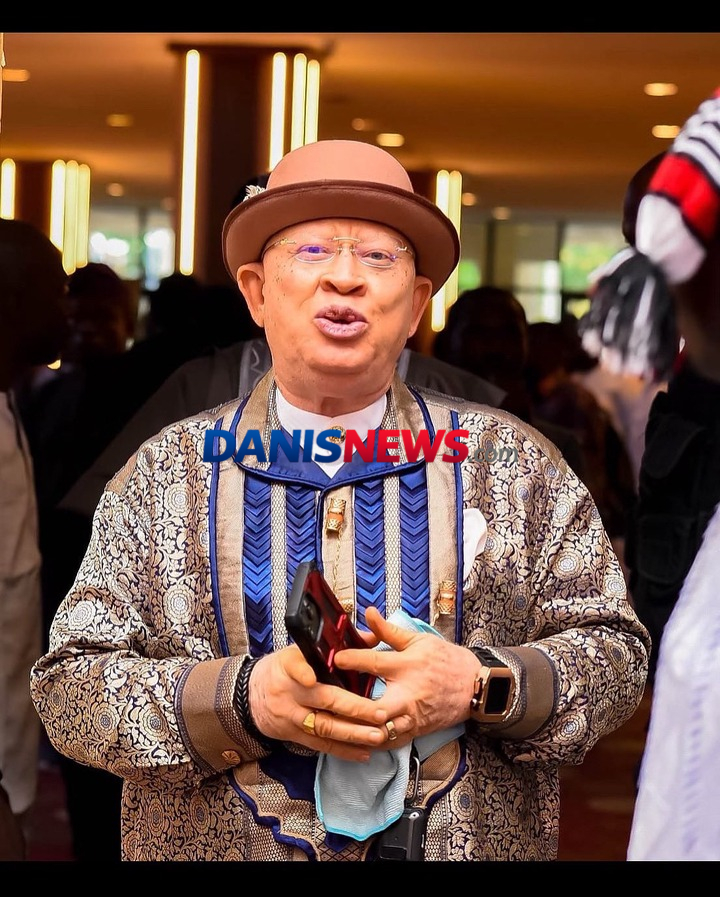
In a fiery continuation of his defense of the current administration, Senator Adams Oshiomhole has taken a direct swipe at former Vice President Atiku Abubakar, accusing the opposition leader of failing to effectively confront the foundational roots of terrorism in his own home region during his time in office.
Oshiomhole, the senator representing Edo North and former Governor of Edo State, launched the critique during a wide-ranging interview on the Mic On Podcast on Sunday, June 14, 2026.
The seasoned politician used the platform to contrast President Bola Tinubu’s current security challenges with the historical crises managed by previous leaders specifically targeting Atiku’s tenure to demonstrate that severe national insecurity is an inherited, long-standing issue rather than a failure unique to the present government.
Reflecting on the historical timeline of insurgency in Nigeria, the former Nigeria Labour Congress (NLC) president pointed out that the deadly Boko Haram sect first emerged and consolidated its power in the North-East geopolitical zone.
Oshiomhole argued that despite Atiku’s immense political stature, local influence, and roots in that specific region, the former Vice President and his contemporaries were virtually paralyzed by the sudden rise of the extremist group, severely limiting their ability to maintain a physical presence in the territories hardest hit by the crisis.
To drive his point home, Oshiomhole delivered a sharp rhetorical blow:
“Atiku Abubakar was Vice President from the North-East and Boko Haram started from the North-East. Atiku Abubakar could not even go to Maiduguri,” Oshiomhole declared during the podcast.
The Edo North lawmaker’s remarks were aimed at shifting the narrative surrounding the Tinubu administration’s current battles with banditry and kidnapping.
By invoking the peak years of the Boko Haram insurgency which saw entire local government areas seized by terrorists Oshiomhole sought to illustrate the massive scale of institutional decay that consecutive governments have had to unravel.
He maintained that if a sitting administration with a powerful North-East political figure could be restricted from freely visiting its own regional hubs, like the Borno State capital of Maiduguri, then critics must afford the current government the patience and objective nuance required to permanently dismantle these deep-seated networks of terror.