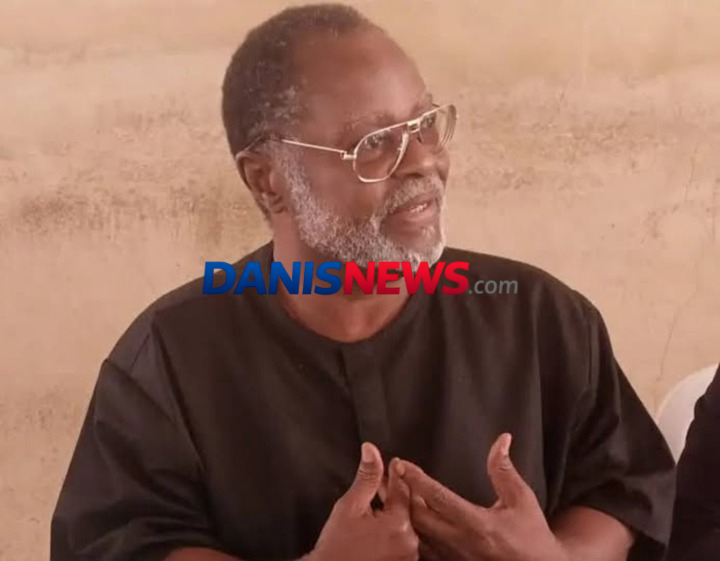
According to a report by Daily Post on Friday, June 12, 2026, Prof Udenta O. Udenta, a fellow of the Abuja School of Social and Political Thought, has expressed concern over Nigeria’s democratic experience, saying that each election cycle in the country tends to produce outcomes that are progressively worse.
He made the remarks on Friday during an appearance on Trust TV, on a day Nigeria marked 27 years of uninterrupted democratic governance.
He also described the country’s democratic system as foreign in character and not developed from local political realities.
Speaking in his assessment of the country’s electoral trajectory, Udenta said the pattern of elections over time has not translated into improved governance outcomes.
According to him, rather than producing steady democratic consolidation, successive elections appear to deepen existing weaknesses within the political system.
He linked this situation to broader structural and institutional challenges that continue to shape political competition and leadership selection in Nigeria.
He further noted that the nature of Nigeria’s democratic arrangement does not reflect indigenous political evolution, arguing that the system currently practiced is not homegrown.
In his explanation, he suggested that the framework guiding governance and elections was largely influenced by external models, which he believes have not fully aligned with the country’s socio-political realities.
Udenta also reflected on the cost and structure of the presidential system in use in Nigeria, describing it as highly expensive and wasteful in operation.
He indicated that the system places significant financial demands on governance, contributing to high levels of public expenditure.
His comments focused on the scale of resources required to sustain political offices and executive leadership at both federal and state levels.
He went on to highlight what he sees as excessive privileges associated with top political offices, noting that office holders operate with considerable luxury within the system.
He suggested that the structure of governance allows for substantial spending on the maintenance of executive lifestyles and administrative overheads, which he views as disproportionate in relation to national needs and priorities.
He also drew attention to how public funds are utilized within the framework of the system, stating that large amounts of money are expended in ways that are legally sanctioned under existing structures.
According to his remarks, these expenditures do not necessarily arise from theft or misappropriation, but are embedded within the official cost of maintaining political offices and government operations.
He said: “The presidential system very expensive system and very wasteful. You can have the governor or the president with lots of luxury. They can have billions of naira legally being wasted, not that money was stolen.”