Kindly Pay Attention: If you’re reading on PHOENIX, Please click the “Read Original” button at the top right to view the full article.
The Itsekiri ethnic nationality has called on the Independent National Electoral Commission (INEC) to fully implement the directives issued by President Bola Ahmed Tinubu regarding the delineation of electoral wards and constituencies in the Warri Federal Constituency, warning that any selective implementation could undermine peace and stability in the area.
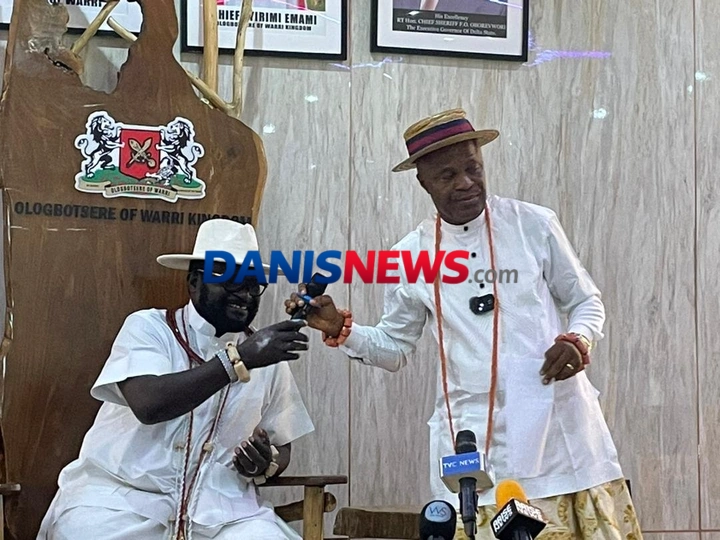
The call was made on Monday during a press conference held at Egbokodo-Itsekiri, Warri South Local Government Area of Delta State.
In the press statement jointly signed by prominent Itsekiri leaders, including Chief Ayiri Emami, Prince Yemi Emiko, Sir Amorighoye Mene and Comrade Alex Eyengho, on behalf of the Itsekiri ethnic nationality, the leaders expressed concerns over what they described as INEC’s partial implementation of agreements reached during peace engagements convened by President Tinubu following disputes arising from the Supreme Court-ordered delineation exercise in Warri South, Warri South-West and Warri North local government areas.
The leaders, who had other prominent sons and daughters of the Itsekiri nation in attendance, noted that representatives of the Itsekiri, Ijaw and Urhobo ethnic nationalities, alongside Delta State Governor Sheriff Oborevwori and other relevant stakeholders, met with President Tinubu in Abuja on June 11, 2026, to seek a peaceful and sustainable resolution to issues surrounding the delineation exercise.
According to them, one of the major issues discussed at the meeting concerned the nomenclature of three wards in Warri South Local Government Area — Buluama, Ewein and Ogbe-Ijoh Warri Urban.
The Itsekiri leaders maintained that both the Itsekiri and Urhobo ethnic nationalities were unequivocal during the meeting that the Ijaw ethnic nationality had no indigenous community within Warri South Local Government Area, although they acknowledged the presence of Ijaw communities in Warri North and Warri South-West local government areas.
They, however, alleged that INEC had proceeded to retain the disputed ward names on its official website despite the outcome of the presidential intervention.
“Recent developments indicate that INEC has proceeded to host and retain the disputed ward names on its national website, contrary to the intendment of the Presidential intervention,” the statement read.
The leaders argued that the action had generated widespread concerns among stakeholders and heightened tensions within affected communities.
They further alleged that there had been inconsistencies in the implementation of the presidential directives concerning ward allocations in Warri South-West and Warri North local government areas.
According to them, while some aspects of the agreements appeared to have been implemented, other directives intended to ensure fairness, balance and inclusiveness among the three ethnic nationalities had allegedly been ignored.
The Itsekiri leaders warned that selective implementation of the resolutions reached during the peace process could erode confidence in the exercise and threaten the fragile peace within the Warri Federal Constituency.
“Stakeholders note that the Presidential intervention sought to promote peaceful coexistence and equitable representation among all ethnic nationalities in the Warri Federal Constituency. Consequently, any selective implementation of those directives undermines confidence in the process and threatens the fragile peace that has been painstakingly maintained,” the statement added.
They therefore urged INEC to immediately and fully comply with all directives and understandings arising from the peace engagements concerning the three local government areas.
The leaders also stressed the strategic importance of the Warri Federal Constituency to the Niger Delta and Nigeria’s economy, noting that any action capable of aggravating ethnic tensions could have far-reaching consequences for national security and stability.
“The Warri Federal Constituency occupies a strategic position within the Niger Delta and remains a critical component of Nigeria’s economic and energy infrastructure. Any action capable of aggravating ethnic tensions within the area carries significant implications for peace, security and national stability,” the statement noted.
The group subsequently called on security agencies and relevant government authorities to ensure that the resolutions reached during the presidential intervention were fully respected and implemented.
They reaffirmed their commitment to peaceful engagement, constitutional processes, the rule of law and constructive dialogue among all ethnic nationalities within the constituency.
Earlier in the event, members of the Ologbotsere family observed a minute’s silence in honour of the oldest member of the family, Pa Higson Jofotan Oporokun who recently passed away at the age of 106.
Traditional prayers were also offered by Chief Ayiri Emami on behalf of the Ologbotsere family and the Itsekiri nation.
Speaking during the gathering, Chief Emami reiterated his commitment to peace, fairness and harmonious coexistence among the Itsekiri, Urhobo and Ijaw ethnic nationalities.
“I am from all three tribes- Itsekiri, Urhobo and Ijaw — and I am committed to the peace and development of Warri. I will not take what belongs to one and give it to another,” he said.
While affirming that the Itsekiri nation had never opposed compliance with the Supreme Court judgment, Emami maintained that the judgment did not empower anyone to allocate Itsekiri land to another ethnic group.
“The Itsekiri nation never kicked against obeying the Supreme Court judgment. But the Supreme Court cannot allocate Itsekiri lands to them, especially as it concerns Warri South,” he stated.
He alleged that areas currently being claimed by some members of the Ogbe-Ijoh community were originally Itsekiri lands that had been acquired by the Nigerian Ports Authority (NPA).
According to him, compensation had been paid to occupants of the affected areas to vacate the land, with the Itsekiri and Urhobo complying, while some Ijaw occupants allegedly refused to leave.
“Money was paid to the people occupying those places to leave. The Urhobo and the Itsekiri left, but the Ijaw people refused to leave. Those places are owned by the Navy and the Nigerian Ports Authority,” he said.
Emami further insisted that INEC lacked the authority to create or rename communities.
“INEC are not town planners to come and create places. The Itsekiris of Warri South will not accept it. We will not sleep until that name is changed. The Itsekiri and Urhobo will come together to ensure that those names are changed,” he declared.
He also maintained that there was no indigenous Ijaw community in Warri South Local Government Area.
“There is no Ijaw in Warri South,” he said.
Commenting further on the longstanding disputes in the area, Emami recalled that the Federal Ministry of Conflict Resolution was established largely due to the Warri crisis and that many of the issues currently being debated had previously been addressed.
“The Ministry of Conflict Resolution was created because of the Warri crisis and some of these issues were dealt with. Eighty per cent of those places occupied by Ijaws from Bayelsa and different areas belong to the Navy. Money was paid by government through the Navy and NPA for those illegal occupants to leave. The Itsekiris and Urhobos left, but the Ijaws refused to leave,” he alleged.
He accused some groups of attempting to alter the historical identity of Warri through the delineation process.
“Nobody will take that. Don’t come and rename Warri. INEC is not a town planner that will come and rename Warri. We will not accept it,” Emami said.
The Itsekiri leader also alleged that efforts had been made to pressure President Tinubu through misinformation, describing the President as a leader committed to fairness and peaceful coexistence among all ethnic groups in the region.