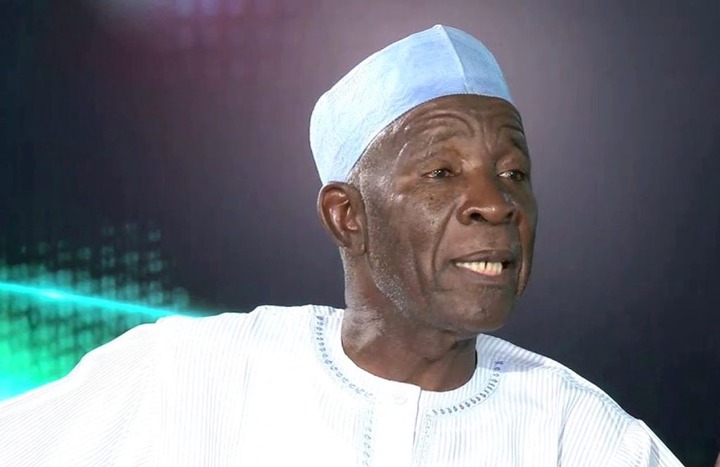
According to a report by Daily Post on Monday, May 4, 2026, a chieftain of the Nigeria Democratic Congress, Buba Galadima, has accused the administration of President Bola Ahmed Tinubu of weakening opposition political structures in the country, particularly the platforms previously used by major presidential contenders.
He made the remarks while commenting on recent political movements involving former presidential candidate Peter Obi and former Kano State governor Rabiu Musa Kwankwaso, both of whom recently changed party affiliations ahead of future elections.
Galadima’s comments focused on what he described as the declining strength of opposition parties that previously played significant roles in national elections.
He referenced the New Nigeria Peoples Party and the Labour Party, stating that these platforms were used by Obi and Kwankwaso during the 2023 presidential election.
According to him, these parties have since experienced internal and external pressures that have affected their stability and influence in the political landscape.
He made the statement while explaining the reasons behind the decision of Obi and Kwankwaso to leave the African Democratic Congress.
Galadima suggested that their departure was linked to broader challenges facing opposition politics in Nigeria.
He stated that the political environment has become increasingly difficult for opposition parties to operate freely, pointing to internal disputes, legal challenges, and structural weaknesses as contributing factors to their instability.
In his remarks, Galadima argued that the ruling party, the All Progressives Congress, prefers a political environment with limited competition.
He suggested that the current political structure is not supportive of a strong multi-party contest.
According to him, the governing party is more comfortable in a situation where electoral contests are less competitive, allowing for a more straightforward path to victory.
His comments reflect ongoing debates about the nature of political competition in Nigeria and the strength of opposition parties.
Galadima further explained that the weakening of opposition platforms has implications for democratic participation.
He stated that when opposition parties are unable to function effectively, it reduces the level of competition in elections and limits the choices available to voters.
He pointed to the importance of maintaining strong political parties that can provide alternatives to the ruling government.
His remarks highlight concerns about the balance of power within Nigeria’s political system and the role of opposition groups in ensuring accountability.
He also revisited the political journey of Obi and Kwankwaso, noting that their movements between parties reflect broader instability within opposition structures.
According to him, their recent decisions to join the Nigeria Democratic Congress were influenced by challenges encountered in previous platforms.
He suggested that repeated changes in party affiliation are a response to the difficulties faced within existing political arrangements, rather than isolated decisions.
Galadima maintained that the ruling party has consistently positioned itself in a way that reduces the strength of opposition competition.
He described this as part of a wider political pattern in which dominant parties seek to maintain electoral advantage.
His statement emphasized the importance of competitive democracy, where multiple parties operate effectively and provide voters with meaningful choices.
He linked the stability of opposition parties directly to the overall health of democratic governance in the country.
He said, “The APC wants to assure itself that the only way it can win elections is to have a single candidate, President Bola Ahmed Tinubu; they are allergic to democratic competition.”