According to report by Vanguard on Friday, June 5, 2026, the leadership of the Nigeria Democratic Congress (NDC) has initiated a reconciliation drive aimed at resolving disputes that emerged after its recent nationwide primary elections.
This move was agreed upon during the party’s second National Executive Committee (NEC) meeting, as part of wider efforts to heal divisions, address complaints from members, and reinforce unity ahead of future political engagements.
Following the primaries, which covered presidential, governorship, National Assembly, and state House of Assembly positions, some aspirants expressed dissatisfaction.
They accused the party of irregularities, imposition of candidates, and manipulation of results, alleging that the process created internal tension and disunity.
However, the NDC strongly rejected these claims. In a statement issued on Friday by the National Secretary, Ikenna Morgan Enekweizu, the party maintained that the primaries were conducted in line with its constitution and internal guidelines.
It argued that the allegations were either based on misunderstandings or deliberate attempts to discredit the party’s growing structure and influence.
According to the party, it adopted a consensus-driven model that relied on consultation with key stakeholders and internal dialogue to reduce conflict and promote cohesion. In the South-East, for example, caucus leaders were responsible for coordinating consultations and making recommendations based on local political realities.
The party named several prominent figures as regional coordinators, including Chief Onyema Ugochukwu in Abia, former Governor Sam Egwu in Ebonyi, former Governor Okwesilieze Nwodo in Enugu, and former Governor Achike Udenwa in Imo.
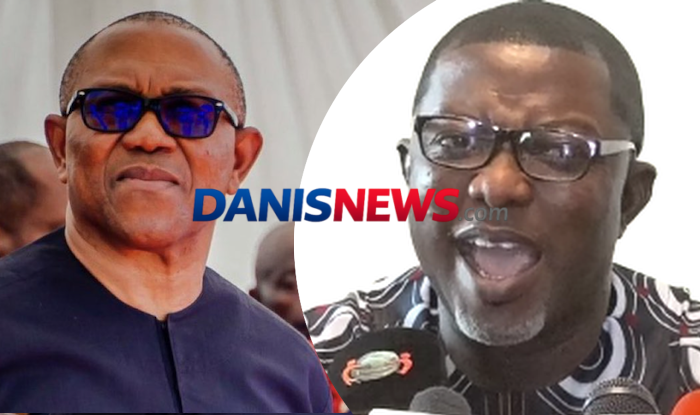
In Anambra, it said the process was handled through the political structure aligned with its presidential candidate, Peter Obi.
Enekweizu stressed that aspirants who were unhappy with recommendations were still free to test their popularity through open democratic competition at the grassroots level.
He also insisted that the national secretariat did not impose candidates on any constituency or state.
The party added that all grievances and disputes had been referred to its Appeal Panel for proper review.
It further confirmed that a formal reconciliation process would now begin, involving state leaders, caucus heads, and stakeholders engaging dissatisfied aspirants to restore unity.
Since receiving its registration certificate in February 2026, the NDC noted that it has built structures nationwide, held multiple NEC meetings, and successfully conducted its first set of nationwide primaries.
It also claimed to have grown significantly, positioning itself as the second-largest political party in the country based on its representation in the National Assembly.