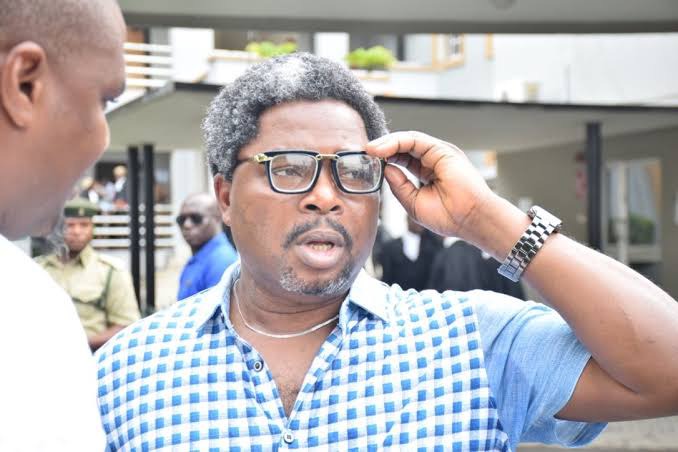
Political tensions ahead of the 2027 general elections intensified on Tuesday after Lere Olayinka, media aide to the Minister of the Federal Capital Territory, Nyesom Wike, reacted sharply to the resignation of activist and politician Omoyele Sowore as National Chairman of the African Action Congress (AAC).
Sowore stepped down from his leadership position shortly after emerging as the AAC’s presidential candidate during the party’s primary election held in Abuja. His resignation was announced by party officials as part of what insiders described as an effort to strengthen the party’s structure ahead of the next presidential race.
However, Olayinka’s reaction on social media quickly drew attention, with the presidential aide mocking the move and questioning its significance. Writing through his verified X account, Olayinka suggested that Sowore’s resignation was only temporary and implied that the activist would eventually return to reclaim the chairmanship after the election cycle.
In a sarcastic tone, Olayinka also ridiculed Sowore’s repeated presidential ambitions, portraying him as a recurring candidate who continuously contests elections under the same political platform. His comments appeared aimed at diminishing the seriousness of Sowore’s political movement and long-standing opposition activism.
The remarks have since sparked reactions online, particularly among supporters of the AAC and followers of Sowore, many of whom defended the former presidential candidate’s consistency and activism over the years.
The African Action Congress had earlier confirmed that Sowore officially relinquished his position as National Chairman after securing the party’s presidential ticket for the 2027 election. According to the party, Samuel Ajeigbe has now assumed leadership as the new National Chairman and will oversee party affairs as preparations intensify for the national polls.
Party officials disclosed that Sowore emerged as the presidential flagbearer through a unanimous endorsement by delegates and party stakeholders during the primary election. The exercise reportedly ended without opposition, reflecting what party members described as broad internal support for his candidacy.
While accepting the nomination, Sowore reaffirmed his commitment to the ideals upon which the AAC was founded. He stated that the party was established to create a new political direction for Nigeria and to confront long-standing issues such as corruption, insecurity, economic hardship, and poor governance.
The activist-turned-politician also used the occasion to criticise the ruling All Progressives Congress (APC), accusing the governing party of attempting to shape public perception ahead of the 2027 elections. According to him, Nigerians are increasingly dissatisfied with the country’s direction and are searching for an alternative political platform capable of delivering meaningful reforms.
Sowore’s emergence as the AAC presidential candidate marks another chapter in his political career, having previously contested the presidency in both 2019 and 2023 under the same platform. Despite failing to secure major electoral victories in previous elections, he has remained one of the country’s most visible opposition figures, particularly among young Nigerians and civil society activists.
Known for his outspoken criticism of successive administrations, Sowore rose to prominence through activism and media advocacy before formally entering partisan politics. His campaigns have largely focused on anti-corruption reforms, accountability in governance, social justice, and institutional restructuring.