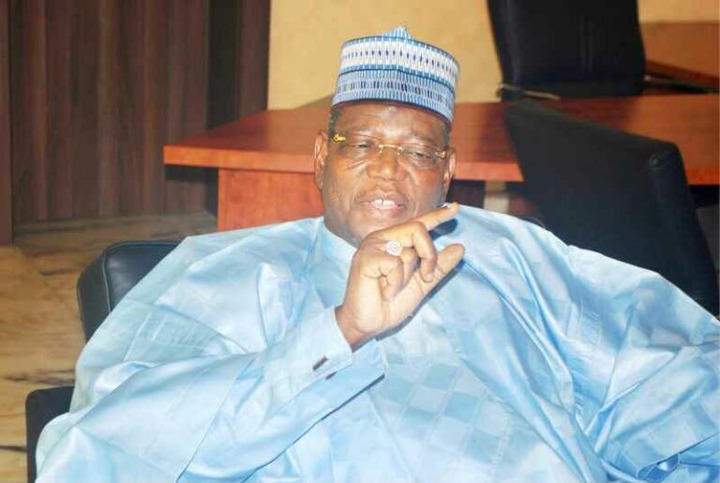
According to a report by The Cable on Thursday, May 21, 2026, former Governor of Jigawa State, Sule Lamido, has called on leaders and stakeholders in northern Nigeria to urgently address internal issues as part of efforts to end the rising insecurity in the region.
He made the statement during an interview with Premier Radio in Kano, where he discussed the growing security challenges affecting several communities across northern states.
Lamido, who is also a prominent figure in the Peoples Democratic Party, expressed concern that insecurity has continued to worsen due to what he described as deep-rooted structural and social problems within the region.
During the interview, Lamido linked the rising cases of banditry and insurgency to issues of leadership failure and the gradual decline of moral values in society.
He explained that insecurity cannot be fully understood without examining the social environment that produces individuals involved in violent activities.
According to him, many of those engaged in criminal operations are products of communities within the region, which he believes points to a broader responsibility on families, communities, and leadership structures to address the situation from its foundation.
His comments focused on the need for a collective response to prevent further deterioration of security conditions.
Security data referenced in public discussions shows that between 2024 and 2025, at least 70 local government areas across six northern states experienced various forms of bandit attacks.
These incidents reportedly affected more than 4,700 individuals, including families displaced from their homes, victims of kidnapping, and communities forced to abandon daily activities due to repeated attacks.
The growing frequency of such incidents has placed pressure on both state and federal authorities to develop more effective strategies to manage insecurity and protect vulnerable communities, particularly in rural areas where security presence is limited.
Lamido also addressed possible solutions to the ongoing security challenges, stating that the introduction of state-level policing could contribute to improving security response in affected regions.
He explained that decentralised policing structures may allow quicker intervention during emergencies and better understanding of local security dynamics.
However, he emphasised that such a system would only be effective if proper training, discipline, and accountability mechanisms are put in place.
He noted that security personnel must be adequately prepared to handle complex situations while maintaining professionalism and respect for human rights in the course of their duties.
He said, “Where are Boko Haram members and bandits coming from? They are our children from the North, they were not thrown from the sky, they are among us, and today they seem stronger than us because of moral decay, the fault is ours, and we must fix it, starting from the foundation and proper upbringing at home.”