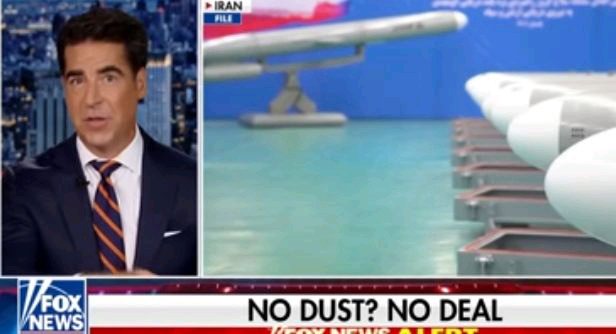
According to a report by Fox News on Wednesday, May 27, 2026, Fox News presenter Jesse Watters stated that increasing cooperation between Arab countries and Israel could dramatically influence the balance of power in the Middle East as tensions involving Iran continue to rise.
Speaking during a segment on Fox News, Watters argued that the growing alliance between Israel and several Arab nations would serve as a strong deterrent against Iran and groups aligned with it. According to him, any hostile action taken by Iran or its proxies against Israel would effectively place them in confrontation with a broader regional coalition.
He further suggested that the evolving partnerships in the Middle East could lessen the long-standing security burden carried by the United States. Watters claimed that regional governments now have greater direct interest in preserving stability and responding to threats associated with Iran, reducing the need for heavy American involvement.
During the discussion, he remarked that the United States would no longer need to act as the “babysitter” of the Middle East because regional actors themselves now have significant interests at stake in maintaining order and security.
Watters also referenced reported military developments near a major strategic maritime route, alleging that Iranian-linked naval units attempting to disrupt activity around the strait had been confronted militarily. He claimed that after alleged mine-laying operations near the waterway, retaliatory missile launch systems connected to Iran were destroyed following a response operation.
His comments come at a time of heightened international concern over regional security, maritime tensions, and shifting diplomatic alliances involving Iran, Israel, and several Arab nations. The Strait of Hormuz remains one of the world’s most critical oil transit routes, meaning any instability in the area carries significant global economic and security implications.
The remarks have since generated mixed reactions online and in political circles. Supporters viewed the comments as backing stronger regional coordination against Iran, while critics argued that such rhetoric risks escalating tensions in an already fragile geopolitical environment.