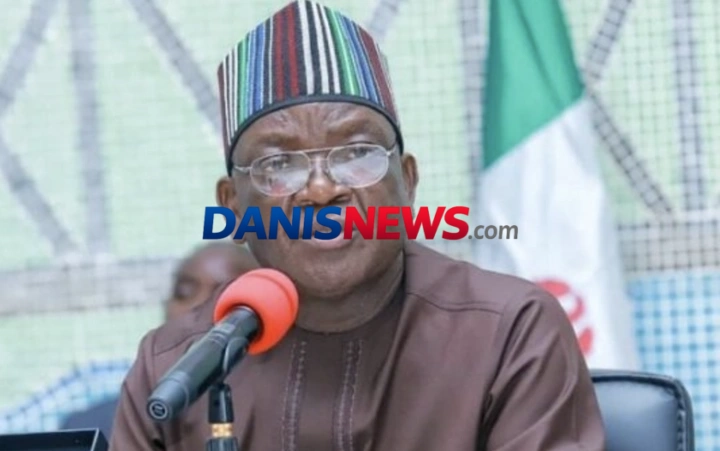
Former Benue State Governor Samuel Ortom has described as ‘’a desperate witch-hunt “ the report of a probe panel which indicted his eight-year administration of mismanaging over N139, 8 billion.
Ortom added that Justice Kubrick Idrisu-led probe panel findings were meant to distract Benue public from what he termed three years of failed governance by Governor Hyacinth Alia.
“Governor Alia is more interested in prosecuting a media trial against his predecessor than addressing serious challenges in Benue State,’’ he said in a statement by his Media Assistant Zege Paul.
The former governor argued that “accountability cannot be achieved through predetermined conclusions.
‘’Justice cannot emerge from a process whose outcome was written long before the first witness,’’ Ortom said.
The panel, in a report received by Deputy Sam Ode on behalf of Alia at the weekend, said it identified about N139.8 billion fraud. It is recommended in the two-volume report that the amount be recovered from individuals and entities found culpable.
The panel, which was set up by the Alia administration a year ago, said it noted gaps in the finances of the 23 local government councils between May 29, 2015 and May 28, 2023, when Ortom served as the state’s governor.
The committee Chairman, Justice Idrisu(rtd) told Deputy Governor Ode that the state generated over N826.5 billion in revenue during the period under review, while total expenditure stood at approximately N683.4 billion.
He further revealed that they uncovered questionable loan transactions involving some local government councils during the Ortom administration, with evidence indicating that repayments in some cases exceeded the original loan amounts without adequate documentation to justify such financial dealings.
He added that the commission discovered instances of transfers of public funds to certain financial institutions without sufficient supporting records, recommending further investigations and recovery of funds where necessary.
The chairman expressed concern over weak financial control systems within government institutions during the period under review and called for stricter safeguards to protect public resources.
Among its recommendations, the commission proposed stronger authorisation procedures for electronic transactions, improved internal audit controls and the immediate discontinuation of the practice of issuing blank pre-signed mandates, describing it as a serious threat to accountability and transparency.
Ode described the commission’s work as a major milestone in the administration’s efforts to promote transparency, accountability and fiscal discipline in public service.
He explained that the establishment of the commission reflected the administration’s commitment to scrutinising past financial activities under the administration of former Governor Ortom, identifying systemic weaknesses and recommending reforms to prevent future abuse of public funds
The Deputy Governor assured that the recommendations would be carefully studied and implemented where necessary.
Ode further said that the Alia administration inherited deep-rooted institutional and administrative challenges but has continued to pursue reforms aimed at rebuilding public confidence and repositioning the state for sustainable development.