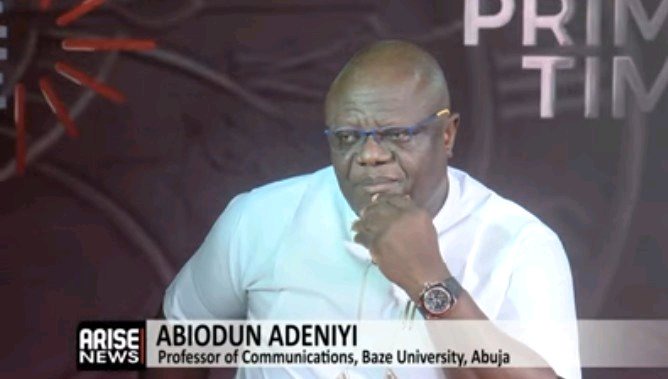
A Professor of Communications at Baze University, Abuja, Abiodun Adeniyi, has offered an assessment of the emerging political dynamics within the African Democratic Congress (ADC), stating that the party’s approach to selecting a presidential candidate will largely depend on numerical strength and electoral value rather than sentiment or loyalty.
Adeniyi made the remarks during a post-interview analysis on Arise News, where he examined recent political developments involving opposition figures ahead of the 2027 general elections.
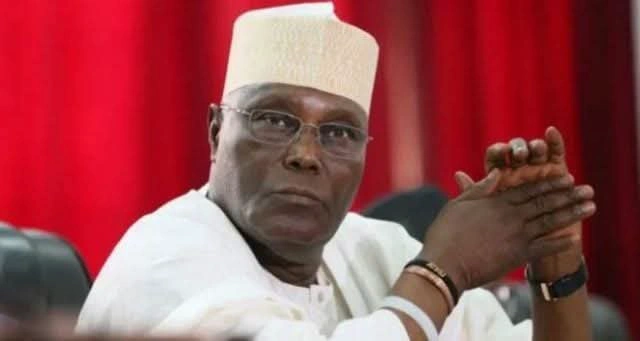
His comments followed renewed political discussions sparked by former Vice President Atiku Abubakar, who has indicated interest in contesting under the ADC platform in what is shaping up to be a competitive opposition realignment.
According to Adeniyi, the ADC is likely to evaluate potential candidates based on measurable political influence, including voter base, regional strength, and ability to mobilize supporters across the country.
He explained that rather than relying solely on ideology or internal party hierarchy, the decision-making process will focus on what each major aspirant contributes to the overall electoral equation.
In his words, “ADC calculation will be largely arithmetical, they’ll be looking at what each of the formidable persons are bringing on board.”
The political analyst noted that in such a scenario, candidates are effectively treated as political assets whose strengths are assessed in terms of votes they can deliver during elections.
Adeniyi identified Atiku and former presidential candidate Peter Obi as the two most influential figures currently associated with the emerging opposition structure within the ADC.
He described both men as possessing significant electoral weight, with strong followings in different regions of the country and among different demographic groups.
However, he warned that bringing both personalities under the same political umbrella could create internal tensions, given their individual political ambitions and leadership expectations.
According to him, while the idea of a united opposition front may appear strategically beneficial, the reality of managing competing ambitions could pose serious challenges for party cohesion.
He suggested that neither Atiku nor Obi is likely to willingly accept a subordinate role in any political arrangement, which could complicate negotiations within the party.