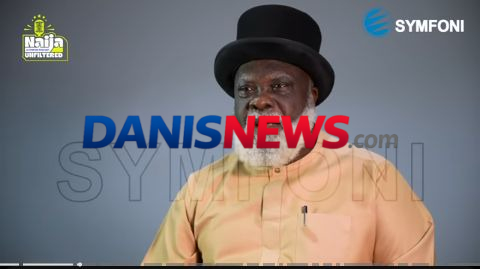
Elder statesman and Niger Delta activist, Ann-Kio Briggs Sara-Igbe, has offered insight into the political crisis that engulfed Rivers State, claiming that suspended Governor Siminalayi Fubara deliberately avoided direct confrontation with his predecessor, Nyesom Wike, because of the role Wike played in his emergence as governor.
Speaking during an interview on SYMFONI, Sara-Igbe said Fubara’s conduct throughout the political standoff was shaped by a sense of loyalty and gratitude toward the former governor.
According to him, “Wike assisted him to become governor. And so, there is no point fighting Wike.”
Sara-Igbe argued that Fubara never sought a political battle with Wike and instead adopted a defensive posture whenever disagreements emerged between both camps.
The elder statesman maintained that many political stakeholders in Rivers State were concerned by what they perceived as the governor’s reluctance to fully deploy the powers of his office during the crisis. He said several elders and supporters expected a stronger response to political challenges confronting the administration.
According to Sara-Igbe, the governor consistently prioritized peace and reconciliation over confrontation, even when some of his supporters believed more decisive political action was necessary.
He alleged that opportunities existed for Fubara and his allies to challenge certain developments through legal and political means but claimed the governor often preferred restraint in order to avoid escalating tensions.
The activist further stated that some members of Wike’s political camp privately expressed concerns about the prolonged dispute and advised that broader consultations should have taken place during meetings involving key political actors and federal authorities.
Sara-Igbe noted that while Fubara’s strategy may have been motivated by a desire to maintain stability, it ultimately left him vulnerable in a political contest that required both defensive and offensive tactics.
Drawing a football analogy, he argued that a team focused solely on defending itself risks eventual defeat if it never attempts to score.
The elder statesman also reiterated his criticism of Wike’s continued involvement in Rivers politics after leaving office, alleging that the former governor sought to retain significant influence over political structures in the state.
He expressed hope that Rivers State would eventually move beyond the crisis and focus on governance, development and the welfare of its people.
The remarks come amid continuing debates over the roots of the political conflict in Rivers State and the relationship between Fubara and Wike. Political observers believe the crisis will remain a major factor in discussions surrounding the state’s future political direction as attention gradually shifts toward preparations for the 2027 elections.