Barely a week after the presidential assent to the 2026 Electoral Act, indications have emerged that governors of the ruling All Progressives Congress (APC) are not comfortable with the removal of the indirect mode of primary election from the new law.
It was learnt that the governors felt ambushed by the federal lawmakers who took full control of the amendment process and ensured the president’s swift assent to the bill.
“We feel frustrated and ambushed”, a South East governor was quoted to have told an ally of President Bola Tinubu in Abuja on Sunday.
The influential South East governor was reportedly accompanied by a colleague from a South West state to register their reservations about the new Act which they claim had whittled down their influence within the ruling party.
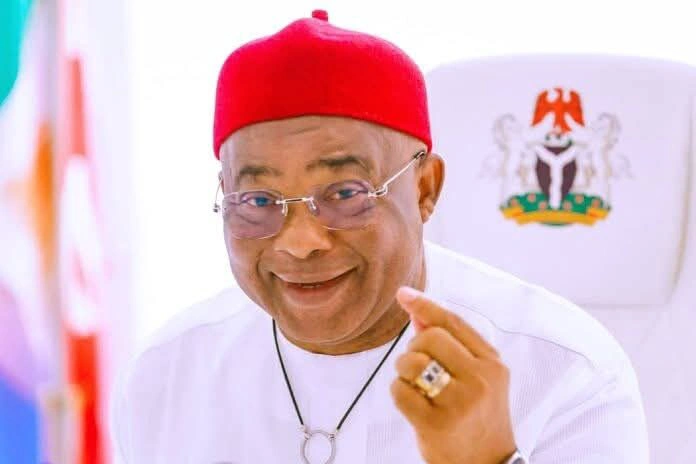
Reacting, however, chairman of the APC Governors’ Forum and Imo State governor, Senator Hope Uzodimma, dismissed the notion that governors were outwitted in any way, adding that the lawmakers acted in national interest.
Speaking through his chief press secretary/special adviser on media, Hon. Oguwike Nwachuku, Uzodimma told LEADERSHIP that the amendment of the Act was purely a legislative matter, stressing that the new electoral framework is for the overall good and benefit of the populace.
Section 84 of the Electoral Act, 2026, prescribes only direct and consensus mode of primary election for the nomination of candidates for elections by political parties.
However, Section 84(2) of Electoral Act, 2022, had provided that, “The procedure for the nomination of candidates by political parties for the various elective positions shall be by direct, indirect primaries or consensus.”
The indirect primaries system, also called delegate system, has been largely controlled by state governors who determine the delegates for such exercise.
However, a credible source, close to one of the governors confided in our correspondent that the APC governors were not adequately consulted within the short period that the Electoral Act was assented to by the president.
“All the governors elected in the platform of the APC are doing is to complement the efforts of our leader and President, Bola Ahmed Tinubu. But the last few days appear to have come like an ambush and they are getting frustrated that the President prefers to listen to some lawmakers than the governors.
“Whatever it is, he remains there and they will always do his bidding but I think they are pained that the Electoral Bill was signed by the President despite the initial reservations raised by the governors about it.
“It is not as if they have many issues about the Bill, but they had their own issues they tabled before Mr President for which he gave consent and approval, especially in the areas relating to the choice of National Assembly candidates for the 2027.
“They know the people at the grassroots better than those who are advising the President to go for direct rather than indirect mode of primary. Their initial plan was to complement Mr President and ensure only those who are electable are fielded, but here we are again.
“They have ambushed the governors and they are frustrated that they are not likely to nominate candidates for the National Assembly election, but we all know what direct primary mode is”, he said.
We are committed, loyal to national interest – Uzodimma
Imo State Governor Hope Uzodimma has stressed that the Electoral Act went through the legislative processes before being signed into law.
According to him, the procedure was purely a legislative matter.
“The legislators deliberated on it and arrived at a compromise, which the president, Bola Tinubu, accented into law,” he said.
The governor’s chief press secretary/special media adviser, Nwachuku, stated that as responsible and responsive party members, “they are loyal to every decision of the party.”
The governor submitted that the lawmakers acted in the interest of the country and the governors have “no reason to feel outwitted”, as this was done “for the well being and overall good and benefit of the populace.”
President Tinubu, last Wednesday, signed the Electoral Act Amendment Bill 2026 into law, despite agitations from Nigerians over a controversial clause that makes electronic transmission of election results optional.
The signed Bill also had the indirect primary option deleted while retaining direct mode of primary and consensus.
The president assented to the bill during a brief ceremony at the Presidential Villa attended by Senate President Godswill Akpabio, Speaker of the House of Representatives Abbas Tajudeen, Senate Leader Opeyemi Bamidele, Deputy Speaker Benjamin Kalu, and other government officials.
The two chambers of the National Assembly had passed the bill on Tuesday after months of debate and deliberations.
Although the legislation contains about 154 clauses, Clause 60, which makes electronic transmission of results optional, generated the most controversy.
Initially, the House of Representatives passed a version of the bill in December mandating the electronic transmission of election results from polling units to the Independent National Electoral Commission’s Result Viewing Portal (IReV) immediately after vote counting. The indirect, drift and consensus modes of primary were passed earlier.
But it was learnt that while the governors worked around the retention of the three options to enable them have a level of influence on the process, some influential lawmakers, who feared that the governors might undo a number of lawmakers ahead of 2027, moved against the states’ chief executives by deleting the indirect mode from the amended Bill.