
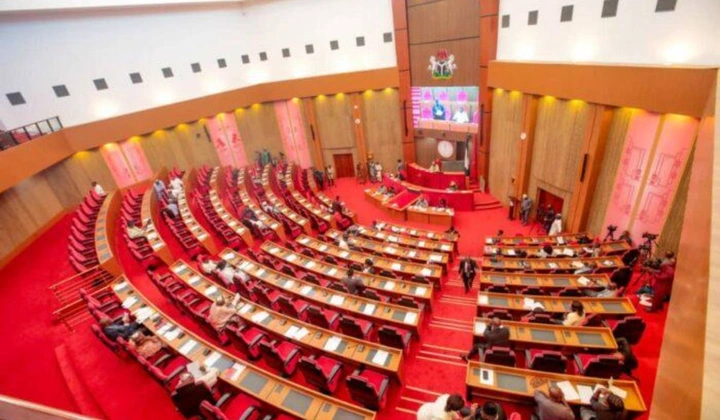
The Senate has stated that real-time transmission of results can only happen if the Independent National Electoral Commission (INEC) adopts an e-voting system.
During an interview on Arise News Channel on Thursday, Chairman of the Senate Ad-hoc Panel to Review the 2026 Electoral Bill, Senator Adeniyi Adegbonmire, said that the INEC Result Viewing Portal (IReV) was never designed as an e-voting platform.
Adegbonmire added that IReV “is not an e-voting platform, but a platform when the election results that have been manually counted and declared at the polling units are uploaded and publicised.”
“People need to understand what real-time means. Real-time transmission can only happen if the INEC adopts an e-voting system. For now, INEC does not have the capability for e-voting.
“Maybe in two or three years, we can adopt e-voting. But as of today, INEC has not put an e-voting system in place.
“This is the misconception that the media has brought into play. The provision you keep emphasising says the presiding officer will first fill the result manually in Form EC8A.
“It is the Form EC8A that has been filled manually and will be transmitted to IReV. If we change ‘transmit’ to ‘upload’ in the Electoral Bill, 2026, will it change anything? The answer is no,” he said.
“It is important, first of all, to understand what IReV does because there is a lot of misconception about it or deliberate misrepresentation of what it stands for.
“The Senate never said INEC should not use IReV for the 2027 elections. So, what is IReV? It is software developed by INEC to publicise results by INEC.
“IReV is not an e-voting platform as some people think. This is the misinformation some people are peddling.
“They keep saying when I want to see my vote. But in reality, IReV is a platform meant to publicise election results already declared at the polling units.
“This is not an emotional argument. I heard people say the version of the House of Representatives should be adopted.
“It is a sheer misconception. What does the version say? It simply says the presiding officer shall electronically transmit the result from each polling unit to the IReV portal in real time, and such transmission shall be done after Form EC8A has been signed by the presiding officer and countersigned by the candidate or polling agent at the polling unit.
“Whether we call it upload, transfer, or transmission, as far as it says IReV must be used, it will be used in the manner it was configured.
“That is the point I am making. You must first manually write out the figure. After you have written out the figure at the polling unit, then you can upload, transfer or transmit, depending on the nomenclature we want to use.
“When you have not complied with the proper filling of Form EC8A, you cannot transfer, transmit or upload it.
“That is what people must understand. When you talk about transmission, it has nothing to do with the sanctity of the voting process.
“If you are given ballot paper to thumbprint, it is counted manually after the election. It is not IReV or BVAS that count ballots. Vote count is manually done,” he added.